FanFeed

FanFeed is a platform that helps people relive past live events and plan more with friends in the future. By reliving their favorite memories and gaining unique, personalized insights into their fandom, FanFeed fosters the connection at the core of all live experiences. Richer fan profiles also give teams and performers new avenues to connect with those who matter most.

Backstory
In the ticketing and live events industry, data is gold. Businesses rely on data for event scheduling, audience targeting, and pricing. Conversely, fans rely on the decisions that stem from this data, seeking ticketing packages that suit their needs and still feel like good deals, ultimately getting them in the door. With all sides of the ecosystem benefiting, it made no sense that most live event fan data stops at the point of purchase, leaving limited visibility into audiences and few meaningful ways to engage them.
Project Overview
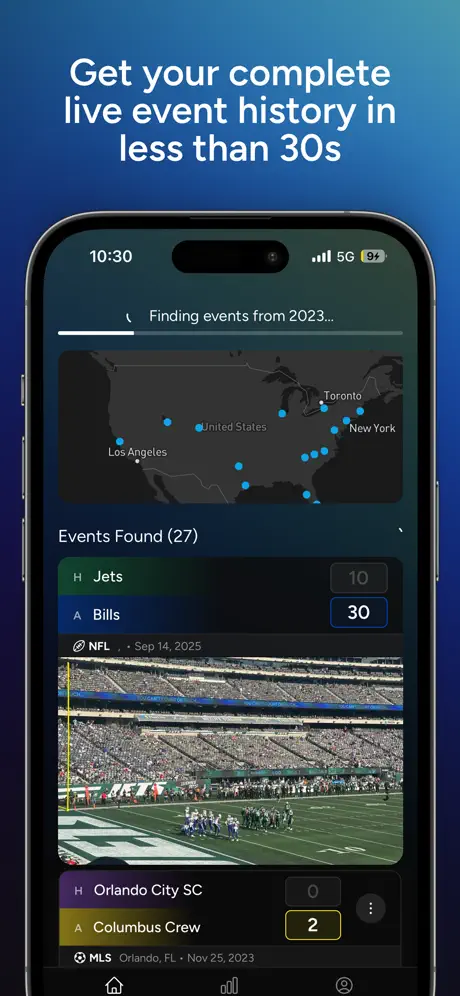
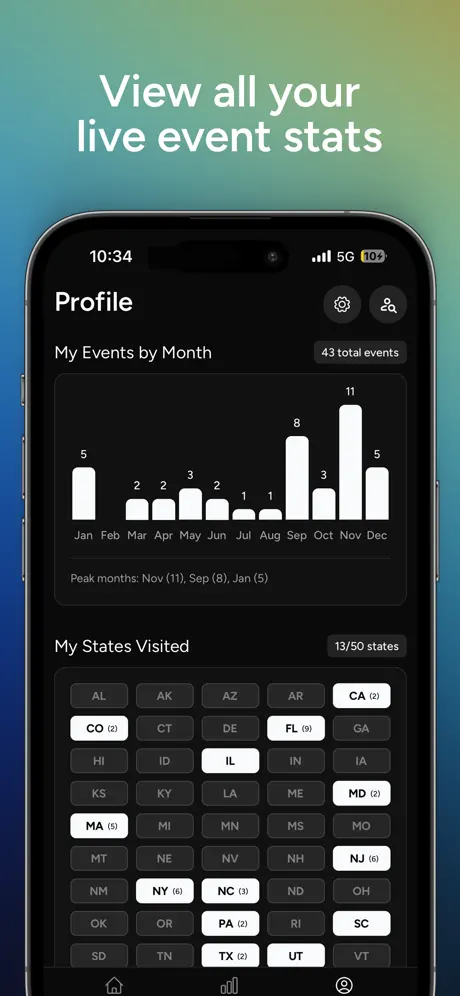
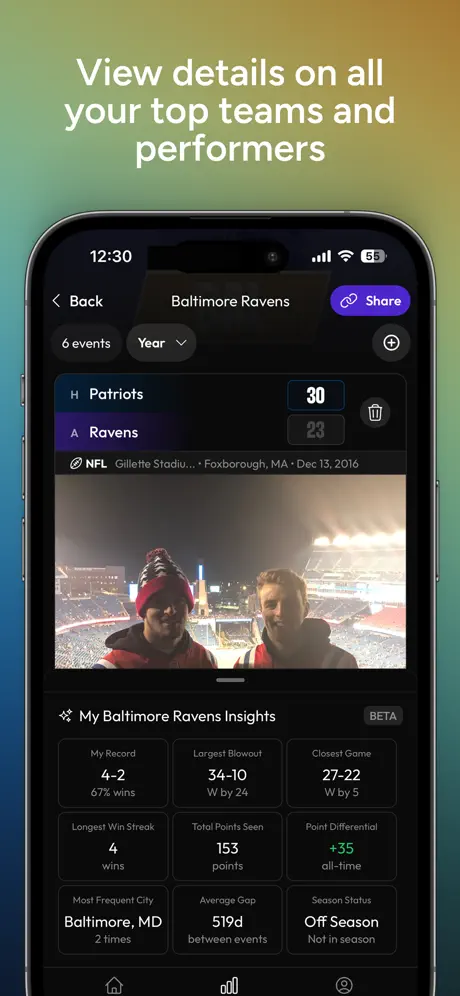
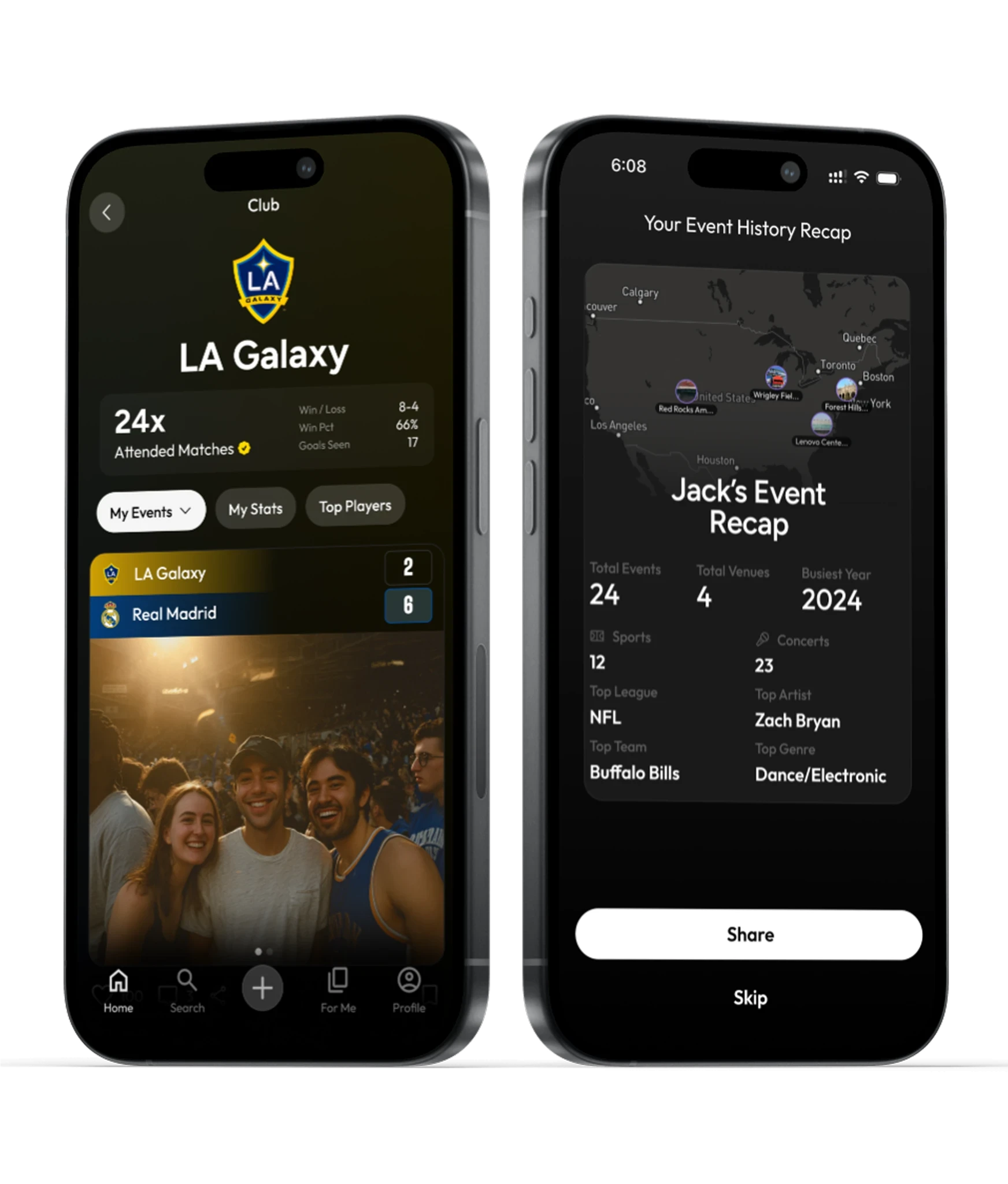
FanFeed is a platform designed to bridge this gap. By analyzing location and time metadata from a user’s camera roll, FanFeed can identify all live events a user has attended over the past 15+ years. With this data, fans receive in-depth stats on venues, performers, and teams, while businesses can better understand their audience through multidimensional fan profiles, improve marketing with new customer signals, and instantly access authentic user-generated content.
The FanFeed product includes a consumer mobile app and a complementary web-based B2B platform.
Unique Factors / Challenges
The two main challenges of the project are data processing and gracefully handling the nuances across the wide array of live events globally.
The foundation of FanFeed is data, which enables FanFeed’s event detection. In its mission to cover all major sports leagues and live events globally, the FanFeed team uses an array of data providers, each providing different types of performer, player, team, and score data. This data is extensively preprocessed before being aggregated to create a record of live events worldwide. A similar process runs in parallel for venues, with attendance, location, and venue name data sometimes coming from different sources. In the end, this results in a system in which photo location and time metadata can be used to detect attendance without invasively examining users’ photos.
Event detection is only half the battle, as the world of live events is broad. From comedy shows to theater to concerts, each event type is associated with different data, and fans care about different things with each. This created a complex UI/UX challenge, as the team had to design a cohesive feed that combined disparate content types while remaining navigable and fun to use. Within the world of sports alone, the team had to design for many different scenarios, as there are different types of scoring, team structures, schedules, etc., even among the most popular sports.
Collecting complex data, analyzing it, and ultimately designing with it in mind affected every aspect of the platform.

Achievements & Outcome
The ability to detect attendance at any live event and the proprietary technology that enables it
The FanFeed app, the first platform of its kind, with over 1,000 downloads
In-app ticketing, enabling both consumers and businesses to leverage richer fan data for their respective purposes
